Friday, August 31, 2012

RBI allows QFIs to hedge currency risk of investments


The Reserve Bank today permitted individual overseas investors, also called Qualified Foreign Investors (QFIs), to hedge currency risk for their investments in equity or debt instruments.

"It has now been decided to allow QFIs to hedge their currency risk on account of their permissible investments (in equity and debt instruments)," the RBI said in a notification. Currency risk arises as QFIs are allowed to invest in rupee-denominated units of domestic mutual fund schemes and listed equity shares.

A QFI is an individual, group or association resident in a foreign country that is compliant with Financial Action Task Force (FATF) standards. QFIs do not include FIIs/sub accounts. As per the notification, QFIs have been allowed to hedge the currency risk on the market value of entire investment in equity or debt in India as on a particular date.

It has also allowed to hedge Initial Public Offers (IPO) related transient capital flows under the Application Supported by Blocked Amount (ASBA) mechanism. As part of hedging mechanism, the QFIs are allowed to pick forward foreign exchange contracts with rupee as one of the currencies and foreign currency-INR options.

Foreign Currency-INR swaps are allowed for IPO-related flows, it said. In order to attract foreign funds, the government recently allowed QFIs to invest up to USD 1 billion in corporate bond market and debt schemes of mutual funds without any lock-in period.

This limit shall be over and above USD 20 billion for FII investment in corporate debt. As of now, foreign investors were allowed to invest USD 20 billion in the country's corporate bond market. With this, the ceiling increased to USD 21 billion.

Gold hits 4-1/2 month high on Fed stimulus hopes


Gold rose to its highest since April in volatile trade on Friday on speculation of new U.S. stimulus after Federal Reserve Chairman Ben Bernanke said in a key speech that progress to bring down unemployment was too slow and the central bank would act as needed.

The metal fell immediately following the release of Bernanke's speech at the economic symposium in Jackson Hole, Wyoming as markets were disappointed over a lack of imminent stimulus. Investors had expected the Fed chief to send a strong message about a new round of bond-buyback known as quantitative easing (QE).

However, bullion quickly rebounded $30 per ounce, or almost 2 percent, f rom the low as markets later interpreted his comments as stimulus friendly. U.S. equities and commodities also reversed course to turn sharply higher as the dollar fell sharply after Bernanke's remarks.

"The main catalyst for the reversal in gold has been that Bernanke used the words 'grave concern' and the interpretation is that there's going to be more QE if he's using such dire projection for the economy," said Jeffrey Sica, chief investment officer of SICA Wealth Management, which has over $1 billion in assets.

"The stagnation of the labor market in particular is a grave concern...because persistently high levels of unemployment will wreak structural damage on our economy that could last for many years," Bernanke said in a prepared speech at the annual meeting of central bankers, finance ministers and economists.

Bernanke said it had to weigh the costs as well as the benefits of more monetary stimulus, although he hinted the costs may be worthwhile.

Spot gold was up 1.1 percent at $1,674.30 an ounce by 11:08 a.m. EDT (1508 GMT), rebounding from a low of $1,646.73 an ounce.

It climbed to a high of $1,677.80 an ounce, which marked the loftiest price since April 12.

U.S. COMEX gold futures for December delivery were up $19.90 an ounce at $1,677, with trading volume on track to finish at its highest level in a month, preliminary Reuters data showed.

Among other precious metals, silver jumped 2.2% to USD 31.08 an ounce. Platinum was up 1.5% at $1,523.99 an ounce, while palladium inched up 0.9% at $620.50 an ounce.

Tuesday, July 31, 2012

NIFTY FUTURE TECHNICAL VIEW FOR AUGUST'12

LOOKS GOOD ABOVE ( BUY ABOVE ) >>>>>5194.40

CROSS & TRADE ABOVE 5194.40 , THEN IT WILL TOUCH

5220.00-------5255.00------5280.00-------5340.00-------5374.40--------5406.70--------5431.30-------5455--------5494.90--------5535-----5570-----5594----5619-----5641


LOOKS WEAK BELOW ( SELL BELOW ) <<<<< 5160.20

BREAK & TRADE BELOW 5160.20 , THEN IT WILL TOUCH

5120-----5068.80----5035.40-----5009.90------4966.40------4915.20-------4864.00----------4815.40---------4786.00--------4746.20--------4718.10-------4669.40


Disclaimer :


Investing in any equity is risky.Our recommendations are based on reliable sources believed to be true & correct, and also is technical analysis based on & conceived from charts.The information provided is not guaranteed as to accuracy or completeness. All investors should consult a qualified professional before trading any stock or Investors should take their own decisions. We assume no responsibility for any transactions undertaken by them. I am not liable or responsible for any legal or financial losses made by anybody.

BANK NIFTY TECHNICAL VIEW FOR AUGUST' 2012

LOOKS GOOD ABOVE ( BUY ABOVE ) >>>>> 10285.00

CROSS & TRADE ABOVE 10285.00 , THEN IT WILL TOUCH

10359------10423-------10523-------10613--------10667------10748------10801------10848------10925----------11084------11170-------11248-----11316------11401.90-------11522.00


LOOKS WEAK BELOW ( SELL BELOW ) <<<<< 10224.00

BREAK & TRADE BELOW 10224.00 , THEN IT WILL TOUCH

10187.90------10139.00---------10065.15--------9956.10--------9875.50-------9822.90-------9749.50----------9701.20--------9581.15--------9520--------9460.25--------9370.30-------9319.60---------9275.10-----9163.90


Disclaimer :

Investing in any equity is risky.Our recommendations are based on reliable sources believed to be true & correct, and also is technical analysis based on & conceived from charts.The information provided is not guaranteed as to accuracy or completeness. All investors should consult a qualified professional before trading any stock or Investors should take their own decisions. We assume no responsibility for any transactions undertaken by them. I am not liable or responsible for any legal or financial losses made by anybody.

Subbarao’s credibility rises with firm policy stance

The Reserve Bank of India’s (RBI) credibility appears to have risen among global peers as the central bank stuck to its guns and refused to reduce the benchmark repo rate on Tuesday, 31 July, opting instead to target inflation management as its chief priority.

Experts and RBI-watchers have lauded Governor Duvvuri Subbarao’s move of keeping rates unchanged, pointing to the ‘nail-biting’ global conditions which have compelled other central banks to cut rates. RBI, on the other hand, sent a signal by cutting the statutory liquidity ratio (SLR), the proportion of deposits banks park in government bonds, by one percentage point to 23 percent so that banks which are short on liquidity can lend to productive sectors.


Says Leif Eskesen, Chief Economist for India & ASEAN at HSBC: “Nail-biting global economic conditions have compelled central banks in advanced and emerging economies to cut rates, and moderate domestic economic growth has drummed up pressures on the RBI to act. However, the RBI kept cool and stayed focused on its objective, which helps cement its credibility.”

Most experts agree that maintaining status quo was a very tough decision for Subbarao given the circumstances building all around. But most agree that preserving the little ammo it has left at its disposal was the right thing for the RBI to do at this stage, should the situation get worse owing to a mix of global and domestic reasons. Acting right now, by cutting rates after it cut rates by a deep 50 basis points in April, could be premature.

Overall, the situation for the RBI is far from comfortable. The central bank has made it clear that the slowdown has little to do with interest rates being where they are, and more to do with supply-side constraints, thanks to lack of progress on structural reforms. The investment cycle has, therefore, taken a hit. Inflation remains a clear and present danger, and RBI is unwilling to risk that by another round of rate cuts.

Says Eskesen: “On the inflation front, the RBI has plenty to worry about in addition to the tight capacity associated with the supply-led slowdown in growth. The depreciated exchange rate is loosening overall financial conditions and countering the decline in oil prices, which has reversed a bit recently. Hikes in diesel and kerosene prices are waiting in the wings, and the deficient monsoons are another headache for the RBI, given the potential implications for headline inflation and inflation expectations.”

That inflation and growth are both going to be different from earlier expectations is amply borne out by the fact that the RBI has altered both projections – bringing down growth to 6.5 percent from the earlier 7.3 percent, and increasing inflation from the earlier 6.5 percent to 7 percent.

The bank’s hopes of fiscal adjustment and consolidation have also not come about. There’s no clarity on when diesel prices will be hiked and the subsidy burden continues to be a huge worry. Big-ticket structural reforms are still nowhere in sight. RBI, therefore, has opted to maintain status quo on rates while giving banks some leeway on liquidity

Chidambaram set to be FM; 3 portfolio changes likely


The government has sent the notification on cabinet portfolio changes to the President house and a formal announcement is expected soon, reports CNBC-TV18's Shereen Bhan quoting sources.

Since Pranab Mukherjee resigned from his post to fight the Presidential election, the Prime Minister was handling the finance portfolio as well. That vacancy has made the portfolio rejig necessary.

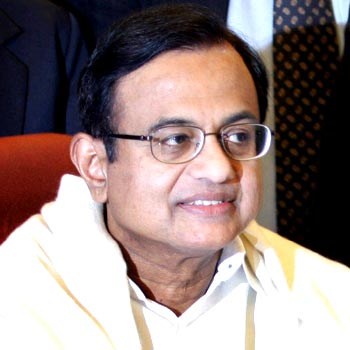
It is now indeed confirmed that P Chidambaram is going to be moving back to North Block. This is going to be good news as far as the market I concerned. Chidambaram is seen as an investor-friendly and a progressive reformist. So, it is going to be interesting to see what he can really do in this tenure as finance minister.

In his place at the home ministry, we are going to see Sushil Kumar Shinde, the former Maharashtra chief minister, now the Power Minister coming in and taking over from Chidambaram. That is not going to go down particularly well because Sushil Kumar Shinde has been anything, but short of a disappointment as the Power Minister.

The power ministry under Shinde has been an absolute disaster. We have seen what has happened over the last 24 hours with the northern grid collapsing, not once, but twice. In fact, today even the eastern grid collapsed. We certainly hope that his tenure at the home ministry is at least better than what he delivered as the power minister.

Sources also say that Corporate Affairs Minister Veerappa Moily is going to be taking additional charge of the power ministry. He will be taking over from Sushil Kumar Shinde and holding the power portfolio additionally, but sources also say that a full-time power minister could be appointed shortly, but at this point these are the three changes.

It is learnt that once the Parliament actually resume it is going to be very difficult for the PM to be taking questions and attending to the business of the finance minister specially given the economic conditions at this point in time and hence the government thought it was prudent to move Chidambaram back to the finance ministry.

Oil companies flayed for hike in petrol price hike


Bihar today accused oil companies for increasing the prices of petrol products without consulting the state government on irrecoverable taxes.

"The oil companies have not given any information to the state government about the irrecoverable taxes before increasing the petrol prices," Bihar Deputy Chief Minister Sushil Kumar Modi told reporters here.

He said the state commercial taxes department had sought the details about it from the oil companies.

Besides, there was no change in state government imposed entry tax, VAT and surcharge on petroleum products, he said.

Now, there is one per cent VAT on LPG, 24.5% on petrol, 18% on diesel and 5% on kerosene, he said.

The deputy chief minister said a meeting would be held under the chairmanship of Chief Minister Nitish Kumar soon after receiving responses of the oil companies.